

The A.C.C.R.E.D.I.T.E.D course framework is designed to help teachers, instructors, and trainers create effective, accredited, engaging courses that deliver success to learners. It incorporates the best practices for course design into a handy acronym: A.C.C.R.E.D.I.T.E.D. Let’s take you through each of the components, providing practical insights into how this framework can be applied to create better courses and deliver better learning experiences.
Assessment-Driven Learning
Importance of Assessment in Course Design
Assessment is a critically important part of the learning process, and it provides the framework on which the entire course is built. When you build assessments first, long before you develop a single unit of content, you will have a much higher chance of creating learning objectives that are both clear and measurable. You will be able to create meaningful, measurable outcomes that clearly define what a learner will be able to do at the end of the course and create a sequence of activities that will help learners get there. Assessments should guide the content, instruction and activities that you design to help learners succeed in your course. If your assessments don’t guide your design, you will be putting the cart before the horse.
Planning also means that teachers can design an appropriate balance of assessment approaches – using formats that will be accessible to different learners and enabling them to demonstrate what they know in different ways. Planning helps to ensure that learners are assessed in ways that are both appropriate and effective.
Types of Assessments
Several types of assessment tools can be used to measure student progress and mastery of course material, such as quizzes, exams, projects or case studies. Tests are an excellent way to establish how much material students keep in their memory after a certain period of time and test their comprehension of the main ideas of a course.
This feedback can be provided frequently, at the beginning of the course or after a certain period, to provide learners and instructors with regular information about how strongly the learning process is progressing.
Another type of assessment is practical applications such as projects or case studies. This type of evaluation allows learners to assess their skills in applying theoretical material to real-life situations. This process makes the course more relevant and interesting, as students have to think of real-life situations and apply their knowledge to these situations.
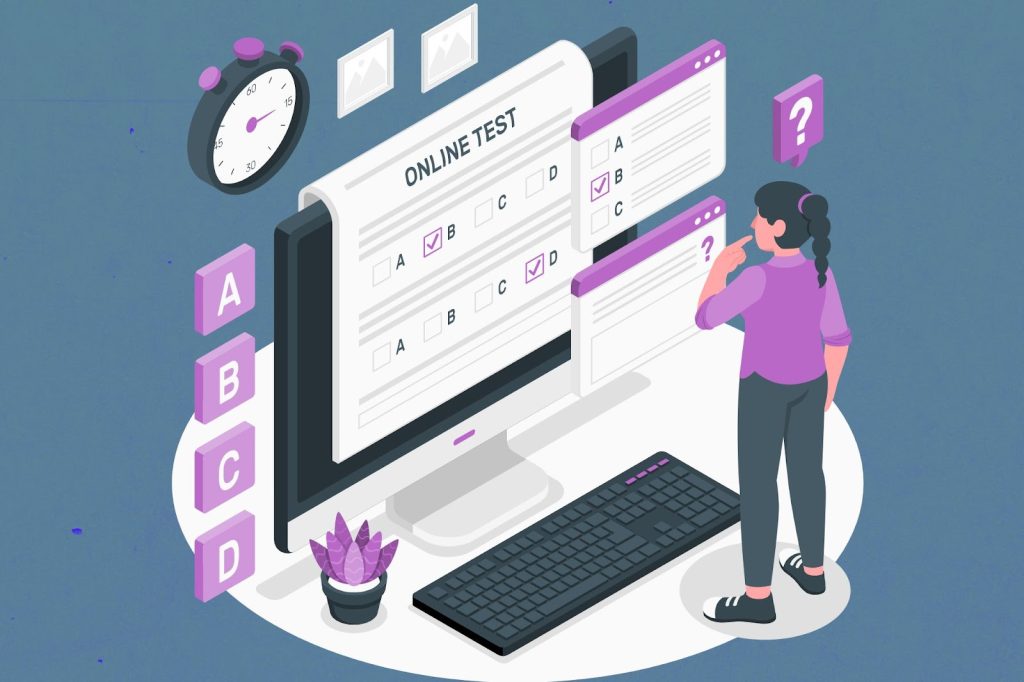
Peer reviews and group assessments encourage interactivity among learners, and they can provide constructive feedback and observations that could enhance the learning experience. These assessment methods not only help to develop critical thinking and analytical skills, but they also provide a sense of community. These assessment types are critical in making sure that the course objectives are met and that the learners are able to apply what they’ve learned.
Curriculum Development
Structured Curriculum Design
A structured curriculum is like the backbone of any course. It provides the outline of the learning objectives, modules, and important milestones that will form the pathway of learning for the instructor and the learners. A structured curriculum allows knowledge to be built upon itself, one module after the other so that knowledge will be coherent and comprehensive. By preventing learners from getting sidetracked or lost, it keeps the focus and continuity of a course.
The curriculum should be developed backwards, starting with the end goals and breaking them down into levels of granularity. The constituents of each module should be divided into learning activities and assessments that lead to the learning outcomes. Each learning activity should consist of instructional content with the purpose of achieving a specific learning outcome and an activity to allow learners to practise and apply the material to a new context. A well-organised curriculum helps the educator to deliver a relevant and worthwhile learning experience to their learners systematically and efficiently.
Aligning with Standards
It must also be well-designed to meet the accreditation requirements, industry standards and the context and needs of the learners. For instance, if targeting professionals in a regulated industry, the course curriculum must include the latest industry guidelines and best practices to prepare the learners for the current work challenges.
In further aligning the programme of study with accreditation requirements, however, we can also make it more likely that the course will be valued by learners and by employers as being worthy of their time and effort. This will help to offset any biases against a course that arises due to the non-traditional nature of its design and delivery. This is particularly true of courses that offer certification or other forms of professional recognition.
Clear Communication
Setting Clear Expectations
Good communication is important for guiding your learners through the duration of your course and ensuring that they have a positive learning experience. From the beginning, you should set clear expectations as to what they can expect from you and the course, including deadlines, assessment criteria and participation. You can assist your learners by providing a detailed syllabus that outlines what they can expect from your course, including a timeline of key milestones and due dates. When learners know what is expected of them and what they can expect from your course, they are better able to stay engaged and motivated.
Ongoing communication through announcements and reminders reinforces expectations and keeps learners abreast of changes and updates to the course. Ongoing communication also ensures learners are up to date with their progress and what they need to do to meet the course’s goals.
Open Channels for Feedback
Good communication is a two-way street, and giving learners ways to give feedback easily is important: whether it’s regular surveys or discussion forums, learners can feel free to provide feedback, ask questions or report issues. This feedback is invaluable for an instructor because it gives an indication of how the course is going and if changes are needed.
Furthermore, communication is improved when there is an open-door policy where learners can come into the instructor’s office to ask questions or express problems. If the instructor encourages their learners to come to class and talk about the subject or asks them to share something very personal, then the learners will feel that they matter and that they are welcome in the class. They will feel that they are being heard and that the instructor cares not just about their grades but about them, too. This helps to build trust between the instructor and the learners and will lead to a very positive learning experience for both the instructors and their learners.

Resource Accessibility
Providing Accessible Learning Materials
Ensuring learning materials are accessible to all learners, including those with disabilities, helps to create an inclusive learning environment by making it possible for every learner to access and engage with the material, regardless of their physical or cognitive access needs. Making learning materials available in multiple formats, such as text, video and audio, can also help learners engage with the material in ways that accommodate their learning styles. For example, providing transcripts for video lectures ensures that learners with hearing impairments can access the material in the same way as their peers with normal hearing while also allowing learners with reading impairments to access the material in an audio format.
Furthermore, they must be coded by accessibility standards so that they are usable with assistive technologies such as screen readers or text-to-speech software. When made accessible, learning resources provide an opportunity for all learners to achieve success by levelling the playing field.
Leveraging Digital Tools
In the digital age, it is important to use the right tools to make learning more accessible. A learning management system like Moodle or Blackise course materials can be distributed to their learners, and the learners can easily access all the materials in one place. Most learning management systems are responsive, meaning they are designed to work well on mobile devices, and their materials can be downloaded to be accessed offline.
Additionally, leveraging cloud storage solutions and file-sharing mechanisms will facilitate access to updated course resources whenever a student wants them. Through the use of digital platforms and tools, the instructor can provide the type of flexibility and convenience that learners need in order to stay engaged with the course from a distance or on the go.
Engagement and Interaction
Fostering Learner Engagement
Learner engagement is essential; it makes learning effective. That is why the A.C.C.R.E.D.I.T.E.D. framework emphasises the use of active learning elements. For example, having discussion groups or group projects would enable learners to apply what they have learnt and enhance the depth of their understanding. These activities would also serve as a community-building activity among learners, allowing them to feel more connected to the course and to other learners.
Additionally, interactive content promotes critical thinking and collaboration – two key skills for learners to become employable in the long run. This kind of meaningful engagement helps to maintain learners’ attention and thus encourages them to stay motivated throughout the course. A good level of engagement, in turn, leads to better retention of the course content, making learning more meaningful and effective.
Technology-Enhanced Learning
Technology can help engage learners by providing them with a plethora of dynamic learning experiences via virtual classrooms or webinars. In addition, through online forums and discussion boards, learners are able to learn from others while being able to interact with instructors and peers simultaneously. This way of learning can help participants gain a deeper understanding by being able to participate in live discussions. Furthermore, learners can ask questions, provide answers, and share knowledge with others, making the learning experience more interactive.
Secondly, online learning sites provide asynchronous learning options as well, where learners get to attend and participate on their own time while still enjoying the collaborative elements of the course. This is especially advantageous for learners with different schedules or those in different time zones to ensure that they stay engaged and involved, no matter the time of day. By incorporating technology into the course, educators can ensure that learners remain actively engaged, keeping them focused on the task at hand.

Development of Competency
Competency-Based Learning
Competency-based learning is the centrepiece of the A.C.C.R.E.D.I.T.E.D framework. The emphasis is on developing learners’ specific, measurable competencies that can be applied in real-world settings. This is a departure from traditional learning models that focus on time-based metrics. In competency-based learning, learners are assessed on their ability to demonstrate the course competencies, not on the number of hours spent on a subject. This approach eliminates the risk that learners will absorb information. Instead, learners are expected to develop the ability to hold their own in any professional or academic setting.
By prioritising competency development, the course can be structured to lead learners to tangible outcomes such as technical mastery, problem-solving acumen and leadership skills. Because competency-based learning equips learners to carry what they have learned in the classroom into their real-world experiences, the learning becomes pertinent and actionable.
Tracking Progress
Because a competency-based system is founded on the idea of learning as a continual process of development towards defined goals, tracking learners becomes an essential part of providing feedback on their progress. Assessments that learners are required to complete regularly and self-evaluation exercises can reveal how effectively they are developing the competencies necessary to achieve their learning goals. Feedback on learners’ performances can be gained through classroom exercises or projects that require learners to master relevant abilities and apply them in real-world scenarios.
Tools such as progress-tracking dashboards, performance analytics, and regular check-ins can help keep learners on track and aware of their progress. Instructors, using insights from these tools, can provide personalised support and targeted feedback to help learners stay on track and make improvements in specific areas. The A.C.C.R.E.D.I.T.E.D framework can also ensure that learners achieve a level of competency by the end of the course through ongoing monitoring and support. This way, we can be confident that all learners who complete the course will have acquired the knowledge and skills needed to navigate real-world tasks.

Inclusivity and Diversity
Creating Inclusive Learning Environments
Designing courses to be accessible to all learners, regardless of their identity, learning style or ability, is an important step to creating a more equitable learning experience for all. An accessible learning environment considers how learners learn and how their backgrounds may influence their learning while also taking into account the needs of those with disabilities, ensuring that learners have the same opportunities to be successful. For instance, this might involve providing course materials in different formats that accommodate visual, auditory or kinaesthetic learners or ensuring that learners with disabilities are provided with the necessary tools and resources to participate fully in the course.
Inclusion also means that course content is relevant to and accessible to learners from culturally, socially and educationally diverse backgrounds. Acknowledging, respecting and welcoming diversity in this way enhances the learning environment, helps all learners feel valued and supports them in achieving their best.
Cultural Sensitivity in Content
Another important way to make course material more inclusive is by making sure it reflects diversity and cultural sensitivity. For example, it is a good idea for course material to include case studies, examples and materials that reflect different cultures, perspectives and experiences in order to make the course more relatable and appealing to a diverse group of learners. Aside from making the course more inclusive, choosing to do this can also expand the horizons of learners who take the course by exposing them to a range of perspectives.
Culturally sensitive material also promotes teaching and learning critical thinking and empathy, requiring students to consider perspectives beyond their own. Culturally inviting courses fill the class with culturally diverse material so that every student can have a sense of belonging and feel respected and valued.

Technology Integration
Leveraging Technology for Better Learning
Emerging technologies can be leveraged to create a more impactful learning experience. For instance, learning tools can be driven by artificial intelligence (AI), such that the materials, learning sequences and feedback provided to the learners can be optimised to suit their progress in real time. Gamification can be used to turn learning tasks into competitive and fun goals, which can enhance motivation and retention by transforming learning into an engaging challenge. Finally, virtual simulations can be used to allow learners to experience the theory they learn in practice, which can help to connect learning to the real world.
With these technologies, teachers can provide a more dynamic, flexible learning environment, one that provides more responsive support to learners and helps them reach their learning goals in a faster and more effective way.
Tools for Interactive Learning
Various tools and platforms can be included in the course to make learning more student-centred. A virtual whiteboard, live polling, and discussion forums can be used to allow for real-time collaboration and idea-sharing. Zoom or Microsoft Teams can be used for live virtual classrooms and webinars for a more interactive learning experience, and learners can interact with the instructor and other learners.
Secondly, simple-to-use tools like Kahoot or Mentimeter can add aspects of gamification, making learning more fun as well as competitive. All of this adds an element of interaction that spurs knowledge retention and allows for a more applied use of concepts.
Evaluation and Improvement
Regular Course Evaluation
To keep the course up-to-date and effective, the course framework and content should be evaluated on a regular basis. This allows educators to make changes in the content or the way it is delivered based on feedback from the learners. In terms of putting educators’ knowledge into practice, it is important to evaluate the learners’ satisfaction and experience whenever they have an opportunity to speak up. Their feedback can be invaluable in knowing how clear the instructional materials are and how effective the assessments are. At the same time, the overall outcomes of the course – such as the learners’ progress and how successful they are in the long run after the course is over – should be reviewed periodically to see if it is really providing what it is supposed to.
In this way, by periodically evaluating the course, the educator can ensure that it stays relevant to the learners’ needs, the industry’s current trends, and the accreditation standards that are in place. In addition, this process of evaluating, assessing and revising the programme helps to keep it fresh.
Adapting to Feedback
This is why it is important to adapt the course if learners’ needs or expectations change as the course progresses. For example, suppose learners report that they are confused by a certain module or that the assessment for a particular module is too difficult. In that case, the instructor can return to these parts of the course and revise these aspects of the course, such as the materials or the assessment rubrics. Feedback might also indicate that the course needs to be enhanced by using new technologies or teaching methods that would better engage the learners.
Introducing learner input into course development helps build a course that is more effective and better tailored to the evolving needs of its audience. By making adjustments based on feedback, teachers can increase the quality and the success of a course.
Delivering Value
Ensuring Learner Success
Value is what counts, and this is what any framework of a course must deliver. A.C.C.R.E.D.I.T.E.D Framework, therefore, ensures that the learners are able to acquire knowledge and skills that they can apply in the industry. This is achieved by ensuring that the content of the course draws examples from industries or companies to ensure that the learning is relevant and that learners are able to understand and connect theory to applied scenarios. It also ensures that case studies and practical examples are used to develop competencies that go beyond mere theoretical understanding. Learners are, therefore, able to apply the knowledge and skills they have acquired to the professional environment.
Producing learners who pass exams is one thing, but helping learners to succeed in their chosen field is another. The course is driven by a values system, which means the course experience becomes much more valuable for the learners and their employers.

Focus on Long-Term Outcomes
The A.C.C.R.E.D.I.T.E.D framework is designed so that the content delivered in the short term will have a long-term impact on learners. Courses based on this framework will help learners build the skills and knowledge that they will continue to use and hone as they progress through their careers. A focus on continuous development, practical skills, and flexibility will ensure that learners are prepared for any changes and challenges that will affect their industry over time.
This far-sightedness also helps a reputation for quality if learners get lasting value from the course. They will stay in touch, recommend it to others and continue their relationship with you as they progress through their career. This is what the framework is really about. It is about creating a learning experience that has a lasting impact on the lives of learners.
Conclusion
As shown in the table above, the A.C.C.R.E.D.I.T.E.D framework offers a systematic process to design new courses that are valuable and effective. The framework allows the designer of the course to assess, curate and design the course to meet accreditation standards, deliver quality and affordability, and optimise the course engagement process. Educators and course designers can benefit from implementing this framework into their course design process. This will ensure that the learners’ goals are met, they grow professionally, and they receive value for the time and money spent on the course.